
Reacher
Szczegóły
Odc 1 00m Odcinek 1
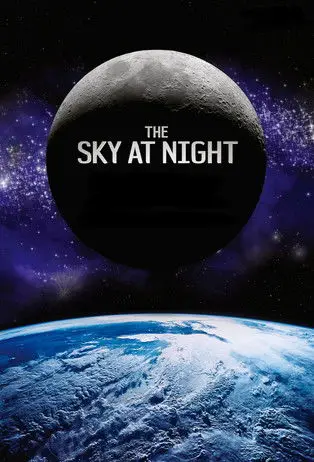
Patrick Moore talks with W.M. Baxter, Secretary of the British Astronomical Association, about the mysterious dark areas, many thousands of miles across, on the sun's surface, known as sunspots. Besides discussing whether these affect the weather, they also consider the effect of solar flares on future manned space-travel. Particles emitted from these may turn out to be one of the worst hazards of all.
The Sky at Night · S05E01
Odc 2 00m Odcinek 2
In this programme, postponed from February, Patrick Moore discusses with Dr. F. L. Jackson, of King's College Hospital Pathology Department, the results of certain experiments carried out specially on behalf of 'The Sky at Night'. In these experiments various living organisms have been subjected to the conditions of atmosphere and temperature which exist on Mars.
The Sky at Night · S05E02
Odc 3 00m Odcinek 3
Following last month's programme on the possibility of life existing on Mars, Patrick Moore discusses whether very low forms of life may be found on the Moon, our nearest neighbour in space and the one most likely to be first reached by man. He also shows viewers the newly published Russian Atlas of the back of the Moon, based on photographs taken by Lunik III.
The Sky at Night · S05E03
Odc 4 00m Odcinek 4
As the Russian space probe approaches Venus, Patrick Moore discusses the little we know about this planet and what sort of world further exploration might reveal it to be.
The Sky at Night · S05E04
Odc 5 00m Odcinek 5
Frank Hyde has built and operated his own radio telescope at Clacton in Essex. Patrick Moore discusses with him the contributions an amateur can make in this latest field of astronomy.
The Sky at Night · S05E05
Odc 6 00m Odcinek 6
Patrick Moore discusses meteors and meteorites with Dr. M. H. Hey of the British Museum of Natural History, and the latest versions of the suggestion that some may contain organic compounds.
The Sky at Night · S05E06
Odc 7 00m Odcinek 7
To celebrate the fiftieth edition of "The Sky at Night", Patrick Moore looks around the night sky through George Hole's 24-inch telescope at Patcham and the 36-inch telescope at the Royal Observatory, Edinburgh. Weather permitting, it is hoped to obtain the first-ever 'live' pictures of probably the most beautiful object in the heavens, Saturn and its rings.
The Sky at Night · S05E07
Odc 9 00m Odcinek 9
From time to time it has been suggested that the Earth may have more than one natural moon. Any such satellite would be very small and faint; but searches for them have been carried out, and recently a Polish astronomer claimed to have photographed two of them. Patrick Moore discusses the theory with Colin Ronan.
The Sky at Night · S05E09
Odc 10 00m Odcinek 10
Patrick Moore talks about star clusters and asks viewers to help find out how many stars in the Pleiades are visible without a telescope.
The Sky at Night · S05E10
Odc 11 00m Odcinek 11
Patrick Moore describes how to set up a small home telescope, powerful enough for real astronomical use, and discusses with L. Marsland Gander the best way to use it. He also gives the result of viewers' observations of how many stars can be seen in the Pleiades.
The Sky at Night · S05E11
Oceń serial
Udostępnij
QwertyKeyboard
12 godziny temuRandomUser123
2 dni temuBored@Work
3 dni temuSpoilerAlert!
4 dni temuJustAnotherFan
5 dni temuWojownikPilota
6 dni temuŚpiochGłowa22
7 dni temuJanKowalski
8 dni temuCaptainUnderpants
9 dni temuTotallyNotARobot
10 dni temuLoudAndProud
11 dni temu420BlazeitYOLO
12 dni temu
Reacher
Silos
Ted Lasso
Obsesja 2026

Outer Banks

Ród Smoka

Sterling Point

Special Ops: Lioness
The Pitt

Lucky

Gra o tron

Mentalista

Krwawa ofiara

Strzępy

Re:ZERO - Życie w innym świecie od zera

Wdowia Zatoka

Kulawe konie

Star Trek: Nieznane nowe światy

Moja wspaniała kariera

Breaking Bad
Szczegóły