

Reacher
Szczegóły
Odc 1 00m Odcinek 1
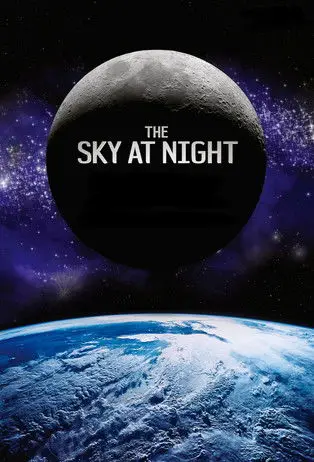
At the start of 1987 The Sky at Night asked for amateur astronomical photographers to send in their pictures - either of objects in the sky, or of observatories and telescopes. In this programme Patrick Moore and Douglas Arnold show the best pictures sent in, and also take a look round the night sky as it appears in January.
The Sky at Night · S32E01
Odc 3 00m Odcinek 3
Yerkes Observatory, at Williams Bay near Chicago, is a most unusual place. Its main telescope is not a reflector, but a refractor - the world's largest Old-fashioned though it may look, Yerkes is in the forefront of scientific research, as Patrick Moore explains when he goes there to talk to the director, Dr Al Harper, and members of the observatory's staff.
The Sky at Night · S32E03
Odc 4 00m Odcinek 4
The sun is the nearest star; but how much is known about it? Less may be known than was thought a few decades ago; there are problems of the sunspots, the strange particles called neutrinos, and the recently discovered oscillations or quivering of the whole solar globe. Patrick Moore and lain Nicholson discuss these problems, and show photographs of last month's total solar eclipse.
The Sky at Night · S32E04
Odc 5 00m Odcinek 5
Are quasars remote and super-luminous, or are they comparatively close to our galaxy? Dr Halton C. Arp , formerly of Mount Wilson Observatory, believes that they are not so remote as most people think, and he discusses these exciting and controversial ideas with Patrick Moore.
The Sky at Night · S32E05
Odc 6 00m Odcinek 6
The first successful spacecraft to the planet Venus was sent up more than a quarter of a century ago. Since then most of the planets in the Solar System have been contacted. In this programme Patrick Moore and Dr Garry Hunt look back over the space-probe story, and describe the exciting developments to be expected during the next few years.
The Sky at Night · S32E06
Odc 7 00m Odcinek 7
Can you identify the main star groups? It is by no means difficult - and once you have found your way around, there are many fascinating objects to be seen. Patrick Moore invites you to join him on a 'tour' of the summer sky, and talks about some of the variable stars, which, unlike our Sun, brighten and fade over short periods.
The Sky at Night · S32E07
Odc 8 00m Odcinek 8
Would you like to see a shooting star? August is the best month of the year for meteors; go outdoors on a dark, clear night between now and 17 August and you should see several members of the Perseid meteor stream as they plunge to their fiery death in the Earth's upper air. With Dr John Mason, Patrick Moore talks about this annual display of cosmic fireworks.
The Sky at Night · S32E08
Odc 9 00m Odcinek 9
How 'empty' is space? Astronomers used to think that there was no material between the stars, or between the galaxies; they now know that there is a great deal. Patrick Moore talks about interstellar material to Professor Alec Boksenberg, Director of the Royal Greenwich Observatory.
The Sky at Night · S32E09
Odc 10 00m Odcinek 10
Two Russian space probes are on their way to Mars. Patrick Moore discusses the fascinating red world with Dr Peter Cattermole of the University of Sheffield.
The Sky at Night · S32E10
Odc 11 00m Odcinek 11
How do you record an astronomical observation? What details should be noted? And what are the important 'dos' and 'don'ts'! Patrick Moore talks to Paul Doherty about these points and also discusses the brilliant planet Jupiter and other features of the night sky in October.
The Sky at Night · S32E11
Odc 12 00m Odcinek 12
Some stars send out radio waves, though generally they are less powerful than other kinds of radio sources in the sky. These genuine radio stars are discussed by Patrick Moore and Dr Alan Wright , who was also present at the opening of the great new Australia Telescope - the most powerful radio astronomy installation in the world.
The Sky at Night · S32E12
Odc 13 00m Odcinek 13
There are some asteroids which pass close to the Earth! Patrick Moore talks about these 'close-approach' asteroids to the American astronomer Eleanor Helin , who has discovered many of them.
The Sky at Night · S32E13
Oceń serial
Udostępnij
QwertyKeyboard
11 godziny temuRandomUser123
2 dni temuBored@Work
3 dni temuSpoilerAlert!
4 dni temuJustAnotherFan
5 dni temuWojownikPilota
6 dni temuŚpiochGłowa22
7 dni temuJanKowalski
8 dni temuCaptainUnderpants
9 dni temuTotallyNotARobot
10 dni temuLoudAndProud
11 dni temu420BlazeitYOLO
12 dni temu
Reacher
Silos
Ted Lasso
Obsesja 2026

Outer Banks

Ród Smoka

Sterling Point

Special Ops: Lioness

The Pitt

Lucky

Gra o tron

Mentalista

Krwawa ofiara

Strzępy

Re:ZERO - Życie w innym świecie od zera

Wdowia Zatoka

Kulawe konie

Star Trek: Nieznane nowe światy

Moja wspaniała kariera

Breaking Bad
Szczegóły