

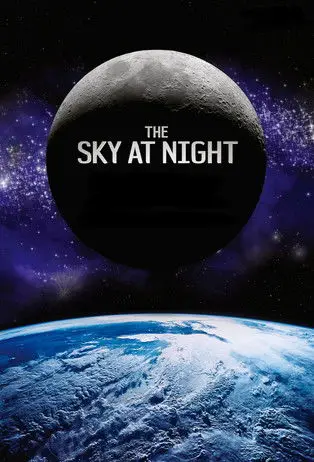
Reacher
Szczegóły
Odc 1 00m Odcinek 1
Can you take astronomical photographs with limited equipment? The surprising answer is yes. Though such pictures cannot rival those of professional astronomers or skilled, well-equipped amateurs, they are pleasing to the eye and may even be of some scientific value. Patrick Moore talks to Douglas Arnold about what can be achieved with very limited photographic equipment.
The Sky at Night · S31E01
Odc 2 00m Odcinek 2
Studies of variable stars form a very important part of the work of modern amateur astronomers. In this programme, Patrick Moore describes how the amateurs work and also gives the latest news about the variable star R Coronae, which periodically veils itself behind clouds of soot.
The Sky at Night · S31E02
Odc 3 00m Odcinek 3
On 24 February a supernova blazed out in the Large Cloud of Magellan, which is the brightest of the external star-systems though unfortunately too far south to be seen from Britain. The new supernova is the brightest to have been seen since 1604, and is of immense interest to astronomers. Patrick Moore and Dr Paul Murdin of the Royal Greenwich Observatory talk about the supernova, and what it may tell us about the life-stories of the stars.
The Sky at Night · S31E03
Odc 4 00m Odcinek 4
The Sky at Night is now 30 years old; the first programme was transmitted on 24 April 1957, before the space age began. Much has happened in those three decades. Rockets have been to the planets, men have reached the moon, great new telescopes have been built, and electronic aids have to a large extent superseded photographic methods. It has been part of the role of The Sky at Night to keep viewers abreast of what has been happening, and to interest newcomers of all ages. This programme looks back over the years, showing again some of the highlights, and then looking ahead to the great new telescopes and the developments which may be expected in the future.
The Sky at Night · S31E04
Odc 5 00m Odcinek 5
We depend upon our atmosphere, without it, no life on earth could have appeared. Other worlds, too, have atmospheres of various kinds, some of them dense and corrosive, others incredibly thin. Patrick Moore talks to Dr Garry Hunt about our neighbour worlds.
The Sky at Night · S31E05
Odc 6 00m Odcinek 6
The Earth and the Moon travel together round the Sun, but the movements of the Moon itself are not so straightforward as might be thought. Patrick Moore and Dr Ron Maddison discuss the whole question of how the Moon moves, how it affects the tides, and why it is very slowly receding from the Earth, at the same time slowing down the Earth's rate of rotation.
The Sky at Night · S31E06
Odc 7 00m Odcinek 7
Coming into operation shortly is a telescope that is not only one of the largest in the world, but probably the most accurate. The William Herschel telescope is on the summit of an extinct volcano on La Palma in the Canary Islands. Patrick Moore visits the telescope and talks to the astronomers who have been closely connected with its development.
The Sky at Night · S31E07
Odc 8 00m Odcinek 8
A great new telescope has just come into operation at the Mauna Kea Observatory in Hawaii, almost 14,000 feet above sea level. It is the James Clerk Maxwell. Telescope, a sort of radio telescope designed to study regions of the universe where stars are being born. Patrick Moore visits the telescope and talks to the astronomers who planned and built it.
The Sky at Night · S31E08
Odc 9 00m Odcinek 9
Is there a tenth planet? New evidence seems to indicate that there is in fact an extra member of the solar system, moving far beyond the paths of the most distant planets now known, Pluto and Neptune. Patrick Moore discusses the whole problem, and speculates as to what Planet Ten may be like - if it really exists!
The Sky at Night · S31E09
Odc 10 00m Odcinek 10
In February of this year a supernova burst out in a neighbouring galaxy and became visible to the naked eye. It has provided astronomers with all kinds of problems. Patrick Moore talks to Dr Russell Cannon , Director of the Siding Spring Observatory in Australia, and to Dr Paul Murdin of the Royal Greenwich Observatory about this remarkable event.
The Sky at Night · S31E10
Odc 11 00m Odcinek 11
Thirty years after its completion, the most famous radio telescope in the world - the 250 foot 'dish' at Jodrell Bank - was officially renamed The Lovell Telescope in honour of its creator. Patrick Moore talks about the work at Jodrell Bank with Sir Bernard Lovell and with the present Director, the Astronomer Royal, Professor Sir Francis Graham Smith.
The Sky at Night · S31E11
Odc 13 00m Odcinek 13
What are the exact positions of the stars in the sky? How do they move, and how far away are they? These are the problems which will be studied from Hipparcos, an artificial satellite due to be launched in 1988. Patrick Moore talks about Hipparcos with Andrew Murray, of the Royal Greenwich Observatory, who has been deeply involved with the project ever since it was first planned.
The Sky at Night · S31E13
Oceń serial
Udostępnij
QwertyKeyboard
10 godziny temuRandomUser123
2 dni temuBored@Work
3 dni temuSpoilerAlert!
4 dni temuJustAnotherFan
5 dni temuWojownikPilota
6 dni temuŚpiochGłowa22
7 dni temuJanKowalski
8 dni temuCaptainUnderpants
9 dni temuTotallyNotARobot
10 dni temuLoudAndProud
11 dni temu420BlazeitYOLO
12 dni temu
Reacher
Silos
Ted Lasso
Obsesja 2026

Outer Banks

Ród Smoka

Sterling Point

Special Ops: Lioness
The Pitt

Lucky
Gra o tron

Mentalista
Krwawa ofiara

Strzępy

Re:ZERO - Życie w innym świecie od zera
Wdowia Zatoka
Kulawe konie

Star Trek: Nieznane nowe światy

Moja wspaniała kariera

Breaking Bad
Szczegóły