
Reacher
Szczegóły
Odc 1 00m Odcinek 1
In December, six American and two Russian space-craft reached Venus. With its dense atmosphere, its searing hot surface and its clouds of deadly sulphuric acid, this strange planet is overwhelmingly hostile; but it is of tremendous interest. Patrick Moore and Dr Garry Hunt talk about the findings of the space-ships, and discuss what will happen next in the exploration of Venus.
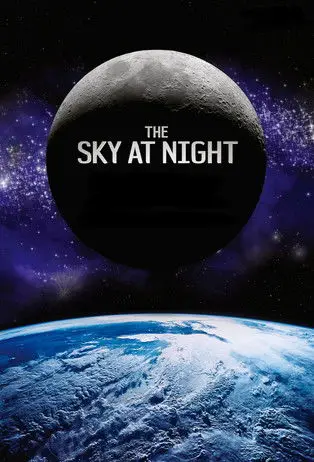
The Sky at Night · S23E01
Odc 2 00m Odcinek 2
All astronomers know of the catalogue of star-clusters and nebulae compiled 200 years ago by Charles Messier ; and ' hunting the M objects' is a favourite amateur pastime. Tonight Patrick Moore describes Messier and some of the objects which he listed.
The Sky at Night · S23E02
Odc 3 00m Odcinek 3
Most scientists believe that intelligent life is common in the Universe. But the creation of life requires special conditions, which could be much less frequent than is usually thought. Patrick Meore talks to Professor Sir Bernard Lovell who believes that life elsewhere, in the Universe is likely to be extremely rare.
The Sky at Night · S23E03
Odc 4 00m Odcinek 4
Is space empty? Astronomers used to think so, but it is now known that there is a tremendous amount of material spread between the stars. Even complex molecules are found there. This discovery has had a great influence upon our ideas about the formation and life-stories of the stars. In this programme Patrick Moore and Dr John Beckman, of Queen Mary College, talk about the developments which have taken place during the past five years.
The Sky at Night · S23E04
Odc 5 00m Odcinek 5
When Voyager 1 flew past Jupiter in March of this year, it sent back results which surprised even the space-planners. The famous Red Spot was shown as a huge whirling storm, while one of the satellites, Io, a world larger than our Moon, has a brilliant red surface upon which active volcanoes can be seen. Patrick Moore and Dr Garry Hunt discuss Voyager l's remarkably successful mission.
The Sky at Night · S23E05
Odc 6 00m Odcinek 6
'Is it going to rain today?' 'Will it be a sunny weekend? ' The British are famous for discussing the weather. Its vagaries are part of our lives, and we all watch the forecasts. 1957 saw the start of the space age, and since then space probes have not only provided information about other planets in the solar system, but they have also studied the atmosphere and weather on Earth itself. Recently, more elaborate satellites have produced the clear pictures we see on television forecasts. Patrick Moore talks to Michael Fish about how these satellites in space have revolutionized weather forecasting.
The Sky at Night · S23E06
Odc 7 00m Odcinek 7
On 2 June the new all-British satellite, Ariel 6, was put into orbit more than 600 km above the earth's surface. Like its highly successful predecessor, Ariel 5, one of its main tasks will be to study x-rays and cosmic rays from deep space, and it is carrying experiments from four British universities. Patrick Moore talks about this new astronomical satellite with Dr Leonard Culhane, the project scientist for the mission.
The Sky at Night · S23E07
Odc 8 00m Odcinek 8
Voyager 2, the latest Jupiter probe, made its rendezvous with the Giant Planet on 9 July. Following the outstanding success of its predecessor, Voyager 1, the results were expected to be spectacular. As well as obtaining additional close-range views of Jupiter itself, Voyager 2 was scheduled to continue studies of the four large satellites of the planet. In this programme Patrick Moore and Dr Garry Hunt give the latest news from Voyager 2.
The Sky at Night · S23E08
Odc 9 00m Odcinek 9
Aries, the ram ... Taurus, the bull ... Gemini, the twins ... These are three of the constellations of the Zodiac, the belt stretching round the sky in which the Sun, the Moon and the bright planets are always to be found. Tonight Patrick Moore talks about the Zodiac, what it meant to the old astrologers and how it is regarded by astronomers of today.
The Sky at Night · S23E09
Odc 10 00m Odcinek 10
The American probe Pioneer II. which by-passed the planet Jupiter in 1974, made the closest approach to Saturn on 1 September 1979. after a journey which has taken it right across the Solar System. Patrick Moore and Dr Garry Hunt discuss the first-ever attempt at surveying Saturn and the rings from close range.
The Sky at Night · S23E10
Odc 12 00m Odcinek 12
Not all stars are alike: some are red, some yellow and some white. These different colours show their different temperatures, and by using spectroscopes it is possible to find out what materials exist there. Patrick Moore and Dr Jacqueline Mitton explain what stellar spectroscopy has told us.
The Sky at Night · S23E12
Odc 13 00m Odcinek 13
Patrick Moore and Michael Bentine discuss UFOs - fact or fantasy? What are the unidentified flying objects which have been so much in the news in recent years? Are they spacecraft from other worlds, as some people believe, or are they optical illusions caused by weather-balloons, satellites, ice-crystals, or other aerial objects? Patrick Moore and Michael Bentine consider the question of UFOs and try to decide what these strange phenomena could be.
The Sky at Night · S23E13
Oceń serial
Udostępnij
QwertyKeyboard
10 godziny temuRandomUser123
2 dni temuBored@Work
3 dni temuSpoilerAlert!
4 dni temuJustAnotherFan
5 dni temuWojownikPilota
6 dni temuŚpiochGłowa22
7 dni temuJanKowalski
8 dni temuCaptainUnderpants
9 dni temuTotallyNotARobot
10 dni temuLoudAndProud
11 dni temu420BlazeitYOLO
12 dni temu
Reacher
Silos
Ted Lasso
Obsesja 2026

Outer Banks

Ród Smoka

Sterling Point

Special Ops: Lioness
The Pitt

Lucky

Gra o tron

Mentalista

Krwawa ofiara

Strzępy

Re:ZERO - Życie w innym świecie od zera

Wdowia Zatoka
Kulawe konie

Star Trek: Nieznane nowe światy

Moja wspaniała kariera

Breaking Bad
Szczegóły