
Reacher
Szczegóły
Odc 1 00m Odcinek 1
In January a comet will be visible in the northern sky, bright enough to be seen without a telescope. Patrick Moore talks about comets and their appearances with an observer, Keith Hindley, and about Sir Edmund Halley - discoverer of Halley's Comet - with Colin Ronan.
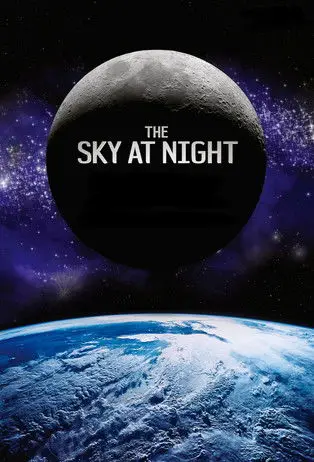
The Sky at Night · S14E01
Odc 2 00m Odcinek 2
The constellation of Orion the Hunter is conspicuous in the southern sky. Patrick Moore talks about its many fascinating features, among them white giant stars, the old red giant Betelgeuse, and the gas-cloud where fresh stars are being formed.
The Sky at Night · S14E02
Odc 3 00m Odcinek 3
In the year 1054 a new star, or Supernova, appeared. It was a star so brilliant that it rivalled Venus and was said to be visible in daylight. It was two years before it faded away. Modern astronomers now know that this was the explosion that produced the Crab Nebula. Tonight Patrick Moore talks to Dr Vinicio Barocas about the Crab Nebula and its mysteries.
The Sky at Night · S14E03
Odc 4 00m Odcinek 4
The Apollo 11 and 12 astronauts brought back colour photographs which have given valuable information about the moon's surface and geology. Soon the Apollo 13 crew will be photographing the rugged uplands of the Fra Mauro crater. But there are special problems in taking photographs on the moon, and tonight Patrick Moore discusses these with H. J. P. Arnold.
The Sky at Night · S14E04
Odc 5 00m Odcinek 5
On 9 May the tiny planet Mercury will be seen as a black dot in transit across the sun's disc. Because it orbits close to the sun, Mercury has always been difficult to observe, and astronomers can only guess at the nature of this planet. Patrick Moore explains how a spacecraft will fly past Mercury in 1973 and send back television pictures.
The Sky at Night · S14E05
Odc 7 00m Odcinek 7
Patrick Moore examines some instruments used by ancient mariners to steer their ships by the stars, and discusses with James Burke the use of the stars by American astronauts and scientists to navigate the Apollo and Mariner Mars Spacecraft. The emergency return of Apollo 13 and the fact that Mariner 7 was 'locked on' to the wrong star presented the navigators with an extraordinary set of problems. As man ventures further into space Steering by the Stars will become more and more important.
The Sky at Night · S14E07
Odc 8 00m Odcinek 8
The two tiny Moons of Mars, Phobos and Deimos, are unlike any other astronomical bodies known to us. Too small to be satellites like our Moon - are they asteroids or minor planets? Patrick Moore examines photographs from the Mars probe Mariner 7 and talks about the unique circumstances of these two astronomical dwarfs.
The Sky at Night · S14E08
Odc 9 00m Odcinek 9
Patrick Moore talks to some of the world's leading astronomers, who are attending an international conference at Brighton, about the spectacular growth in recent years of our knowledge of the universe - and also about the huge problems still to be solved.
The Sky at Night · S14E09
Odc 10 00m Odcinek 10
The devastating results of earthquakes are well known, but recent observations have shown that the moon too has moon-quakes, and they are linked with the tidal effects of the earth on the moon. Patrick Moore, who has himself been concerned with the observations, talks to Dr Maurice Ewing, leader of the American investigating team, and other leading authorities about these discoveries and their significance.
The Sky at Night · S14E10
Odc 11 00m Odcinek 11
Spacecraft have already been to the nearest planets, Mars and Venus. Within the next 10 years other probes will explore much further, heading inward to Mercury, and outward beyond Jupiter-perhaps even to Pluto. Patrick Moore discusses with Iain Nicolson the information and pictures we may get back from these missions. He also talks to Professor Clyde Tombaugh, the discoverer of Pluto.
The Sky at Night · S14E11
Odc 12 00m Odcinek 12
One of the newest and most exciting branches of science, infra-red astronomy can detect 'invisible light' from the stars and so tell us more than we could find out from visible light only. Patrick Moore talks to Professor James Ring of Imperial College about the special techniques used in infra-red astronomy and plans for further research.
The Sky at Night · S14E12
Odc 13 00m Odcinek 13
Astronomers now think there must be planets circling many of the stars in the Universe, and that some of these planets could well be inhabited. Patrick Moore talks to Dr Peter van de Kamp, who has already managed to detect two planets going round another star.
The Sky at Night · S14E13
Oceń serial
Udostępnij
QwertyKeyboard
10 godziny temuRandomUser123
2 dni temuBored@Work
3 dni temuSpoilerAlert!
4 dni temuJustAnotherFan
5 dni temuWojownikPilota
6 dni temuŚpiochGłowa22
7 dni temuJanKowalski
8 dni temuCaptainUnderpants
9 dni temuTotallyNotARobot
10 dni temuLoudAndProud
11 dni temu420BlazeitYOLO
12 dni temu
Reacher
Silos
Ted Lasso
Obsesja 2026

Outer Banks

Ród Smoka

Sterling Point

Special Ops: Lioness
The Pitt

Lucky

Gra o tron

Mentalista

Krwawa ofiara

Strzępy

Re:ZERO - Życie w innym świecie od zera

Wdowia Zatoka

Kulawe konie

Star Trek: Nieznane nowe światy

Moja wspaniała kariera

Breaking Bad
Szczegóły